


Part 3 of our 25 Years of Impact series
In March 2011, a powerful earthquake struck off the coast of northeastern Japan, triggering a devastating tsunami.
Give2Asia responded by mobilizing $10 million for recovery efforts led by local nonprofits.
By then, responding to disasters was no longer new territory for the organization. Give2Asia had already supported major recovery efforts following the 2004 Indian Ocean tsunami and the 2008 Wenchuan earthquake.
But the years that followed would broaden the organization’s role even further.
Give2Asia was not only connecting donors with local organizations. It was becoming more deeply involved in the networks, institutions, and partnerships shaping philanthropy across Asia.
Where We Left Off
By 2010, Give2Asia had built a broad platform for cross-border giving:
- Families and foundations could support causes across Asia.
- Corporations could develop locally informed philanthropic programs.
- Donor-advised fund holders had a pathway for international giving.
- Friends Funds connected overseas nonprofits with U.S. supporters.
- Local partners provided expertise and due diligence country by country.
The next five years would build on that foundation.
Give2Asia expanded its institutional presence, invested in philanthropic leadership, and began developing new approaches to challenges that could not be solved through individual grants alone.
2011: Responding to Disaster—and Building in Asia
The Tohoku earthquake and tsunami became one of the defining humanitarian disasters of 2011. 
Give2Asia mobilized $10 million for recovery efforts with local nonprofits in Japan, drawing once again on the relationships and cross-border giving infrastructure it had spent a decade building.
That same year marked another important step in Give2Asia’s evolution: support for the creation of a new charitable organization in Hong Kong SAR, Give2Asia Foundation.
Together, these developments reflected two sides of the organization’s growing role—helping international donors respond when communities faced urgent needs while continuing to strengthen its long-term presence in Asia.
2012: Carrying Forward a Regional Legacy
Give2Asia’s roots stretched back to the Asia Pacific Philanthropy Consortium, or APPC, whose regional network helped inspire the organization’s creation.
In 2012, that connection came full circle.
After 18 years of work, APPC merged into Give2Asia, which became steward of its extensive body of research on philanthropy across the Asia Pacific region.
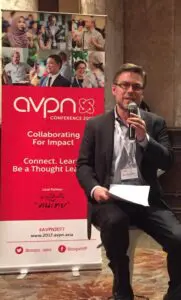 The same year, the Asia Venture Philanthropy Network (AVPN) launched, with Give2Asia joining as a founding member.
Both milestones reflected a broader role for the organization.
Give2Asia had started as a bridge between donors and charitable projects. A decade later, it was also helping preserve knowledge, build connections among philanthropy practitioners, and contribute to the development of the region’s philanthropic infrastructure.
2013: Investing in Philanthropic Leadership in China
Give2Asia’s work in China was also deepening.
In 2013, Give2Asia became the first funder of the China Foundation Center’s leadership training program, supporting efforts to strengthen the skills and capacity of foundation leaders.
At the same time, Give2Asia expanded its own presence in Beijing to three full-time staff.
That investment reflected an approach that had guided Give2Asia from the beginning: effective cross-border philanthropy depends on local expertise.
As China’s philanthropic sector continued to develop, having people and partnerships on the ground gave Give2Asia a stronger understanding of local organizations, regulations, and opportunities—and helped donors engage more effectively.
2014: From Disaster Response to Disaster Preparedness
After responding to major disasters across Asia, Give2Asia began asking a different question:
What if philanthropy could help communities prepare before disaster strikes?
In 2014, support from Margaret A. Cargill Philanthropies funded a partnership between Give2Asia and the International Institute of Rural Reconstruction (IIRR) in Manila.
The initiative examined community-based approaches to disaster risk reduction across South and Southeast Asia.
The shift was significant. 
Emergency relief remained essential, but experience had shown that communities also needed resources to prepare for disasters, reduce risk, and strengthen their ability to recover.
That thinking would eventually become an important part of Give2Asia’s disaster philanthropy work.
2015: Fifteen Years of Growth
By 2015, Give2Asia had reached another milestone: its 15th anniversary.
Nobel Peace Prize Laureate Muhammad Yunus, whose work helped pioneer microfinance as a tool for economic development, delivered the keynote address at Give2Asia’s anniversary gala in San Francisco. Corporate partners including Facebook joined the celebration.
The anniversary offered an opportunity to reflect on how much had changed.
Give2Asia had grown from a new organization built around a single scholarship grant into a regional philanthropic network supporting donors and nonprofits across Asia.
And that network was still expanding. In 2015, Give2Asia added Bhutan and Myanmar to its grantmaking footprint.
Building More Than a Bridge
The first decade of Give2Asia’s work proved that a trusted bridge for cross-border philanthropy could work.
The years from 2011 to 2015 showed what could be built on top of it.
Give2Asia was responding to disasters while investing in preparedness. It was helping donors make grants while strengthening nonprofit and philanthropic leadership. And it was connecting organizations across borders while contributing to a growing regional community of philanthropy practitioners.
Effective philanthropy requires more than moving resources. It requires strong local institutions, trusted relationships, and the capacity to create lasting change.
Those investments would become especially important in the years ahead as Give2Asia deepened its operations in China, developed new partnerships across the region, and prepared for a major milestone: establishing an officially registered China Representative Office.
Next in our 25 Years of Impact series: 2016–2020, as Give2Asia expands its partnerships, establishes a formal presence in China, and responds to an unprecedented global pandemic.
Explore More of Our History
This story is part of our 25 Years of Impact series, looking back at the milestones, partnerships, and people who have shaped Give2Asia since 2001.