


Part 2 of our 25 Years of Impact series
In May 2008, a devastating earthquake struck Wenchuan County in Sichuan Province, killing tens of thousands of people.
Within months, Give2Asia had raised more than $17 million for local organizations serving affected communities. According to Give2Asia’s historical records, that made it the second-largest international funder of Wenchuan relief and recovery, after the International Red Cross.
Give2Asia was just seven years old at the time.
How did a young organization reach that scale so quickly? The answer lies in the years just before and after the earthquake. During that period Give2Asia built the relationships, partnerships, and infrastructure that turned a promising model into a trusted platform for cross-border giving.
Where We Left Off
By 2005, Give2Asia had moved past its startup years. In just a few years it had:
- created a new model for cross-border philanthropy
- expanded beyond China
- begun working with corporate donors
- launched Friends Funds
- mobilized $10 million for communities hit by the 2004 Indian Ocean tsunami
The next chapter was about making that model stronger. Give2Asia did that by deepening its roots in Asia, forging partnerships with major U.S. philanthropic institutions, and proving what locally informed giving could achieve at scale.
2005: Leadership That Reflects the Region
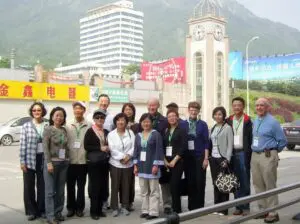 As Give2Asia grew, it became more important that its leadership reflect the region it served. In 2005, the organization further diversified its Board with experts from across Asia.
Cross-border philanthropy is about far more than moving money from one country to another. Effective giving requires an understanding of local institutions, cultural context, regulatory environments, and the needs of communities donors hope to reach.
Building that expertise into its leadership strengthened one of Give2Asia’s defining traits. Its work would be shaped by knowledge and relationships rooted across Asia, as well as by donors overseas.
2006: Connecting Philanthropy and Social Innovation
In 2006, Give2Asia formed new partnerships with two influential Silicon Valley institutions:
- The Skoll Foundation partnered with Give2Asia to identify nonprofit leaders in Asia who could become candidates for the Skoll Social Entrepreneurship Award.
- The Omidyar Network worked with Give2Asia to grow philanthropy toward innovative social enterprises across the region.
The philanthropic landscape was changing fast. Donors were looking beyond traditional charitable models toward social entrepreneurship, innovation, and new approaches to complex problems. Give2Asia’s local relationships put it in a strong position to connect that interest with emerging leaders and organizations across Asia.
2007: New Pathways for Donor-Advised Giving
While deepening its roots in Asia, Give2Asia was also building new connections in the U.S. philanthropic sector. In 2007, it began forming referral relationships with major donor-advised fund providers:
- Fidelity Charitable agreed to a partnership allowing Give2Asia to provide cross-border services to donors holding donor-advised funds at Fidelity.
- King Baudouin Foundation United States (KBFUS) became a referral partner. Give2Asia handled the Asia Pacific while KBFUS handled Europe and Africa; enabling both to refer donors based on where they wanted to give.
These relationships gave donors something increasingly valuable: a trusted way to give internationally through philanthropic vehicles they already used.
They also anticipated a more connected model of global philanthropy—one built through cooperation between institutions rather than requiring a single organization to operate everywhere.
2008: A Defining Year
The Wenchuan earthquake response was a turning point. With gifts came from major donors including the Hong Kong Jockey Club and the Committee of 100, Give2Asia raised more than $17 million for organizations serving affected communities.
That wasn’t the only milestone. That year, Give2Asia also passed $30 million in total grantmaking in a single year. Strong growth in corporate philanthropy, including support from the State Street Foundation, helped drive that result.
Seven years earlier, Give2Asia had been an idea built on a single scholarship grant. Now it had become a major channel connecting overseas philanthropy with local needs in China and beyond.
2009: Local Knowledge, Country by Country
As grantmaking grew, reliable local partners mattered more than ever. In 2009, Give2Asia strengthened its ties with national institutions that could provide local expertise, due diligence, and help identifying nonprofits:
- The Japan NPO Center in Tokyo became Give2Asia’s primary partner for due diligence and charity identification in Japan.
- The Pakistan Centre for Philanthropy in Islamabad took on the same role in Pakistan.
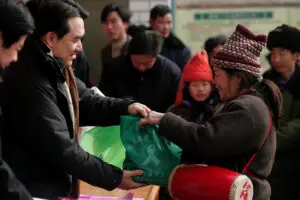
These partnerships reflected a core belief: Asia is not a single philanthropic market. Give2Asia worked through organizations and experts who understood each country’s nonprofit sector, operating environment, and communities. That gave donors the confidence to make informed decisions and to support organizations rooted in the places they served.
2010: A Model Comes of Age
By the start of a new decade, the bridge Give2Asia launched in 2001 had become a broad philanthropic platform:
- Families could pursue deeply personal charitable goals.
- Corporations could build programs in the communities where they operated.
- Donor-advised fund holders could recommend grants across borders.
- Nonprofits could reach supporters through Friends Funds.
- Institutional partners could draw on Give2Asia’s expertise to find organizations and opportunities across the region.
The model had matured, but its central idea had not changed:
Effective cross-border giving requires both global access and local expertise.
That principle would become increasingly more important in the decade ahead, as Give2Asia expanded its disaster response work, strengthened its presence in China, and helped shape a wider regional philanthropy sector.
Next in our 25 Years of Impact series: 2011–2015, a new decade of regional leadership, disaster preparedness, and deeper investment in China’s philanthropic sector.
Explore More of Our History
This story is part of our 25 Years of Impact series, looking back at the milestones, partnerships, and people who have shaped Give2Asia since 2001.