


Part 1 of our 25 Years of Impact series
In 1999, a delegation of Chinese foundation leaders visiting the United States asked a wealth advisor a simple question:
Was there a community foundation that could help private funders make grants into Asia?
There wasn’t.
U.S. donors who wanted to support communities in Asia had few trusted ways to do it. Across the region, local nonprofits were doing remarkable work and building their own institutions, networks, and expertise, but they were largely out of reach of the overseas supporters who wanted to help them.
Give2Asia began in that gap. As we mark our 25th anniversary, we’re looking back at the people, partnerships, and turning points that shaped us. Our story starts before we existed.
1994: A Seed Is Planted
The delegation’s visit didn’t happen by chance. It grew out of relationships formed five years earlier, when philanthropic leaders from across the Asia Pacific founded the Asia Pacific Philanthropy Consortium (APPC).
At the time, philanthropic institutions in the region had few chances to learn from one another. APPC changed that. It brought together foundation leaders, legal experts, and charitable institutions from Australia, China, India, Indonesia, Japan, Pakistan, the Philippines, South Korea, and Thailand.
Its goal was ambitious: to strengthen the infrastructure for philanthropy and to increase both the quality and the quantity of giving within and to Asia. Through leadership exchanges, research, and regional dialogue, APPC built trust between professionals across borders. Give2Asia would later grow from that trust.
1999: An Answer Takes Shape 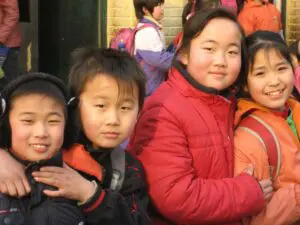
When the delegation’s question went unanswered, philanthropy leaders saw an opportunity. They drew on donor networks in the United States and nonprofit connections throughout Asia and began designing an organization that could close the gap.
The vision was a community foundation for Asia. It would be grounded in local knowledge and able to guide donors through the legal, cultural, and practical complexities of responsible cross-border giving.
That vision became Give2Asia.
2001: From Idea to Institution
Give2Asia launched in 2001 as an independent U.S. public charity. Its founding mission was to expand the quality and quantity of private philanthropy to Asia.
From day one, the model rested on two things that still define our work: deep relationships with donors, and strong connections to communities and nonprofits on the ground.
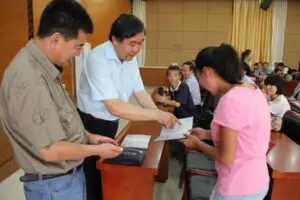
Our very first advised grant showed what that could look like. The Robert N. Chang Foundation, established by a family with roots in China, partnered with Give2Asia to fund university scholarships for promising rural students in Inner Mongolia. It was philanthropy at its most personal: a family investing in young people from the place it came from. Give2Asia helped turn that intention into real local support.
It was the first of many relationships connecting families, foundations, corporations, and charities across borders.
2002–2003: Proving the Model
Growth came quickly. In 2002, Give2Asia expanded its grantmaking beyond Greater China to India. That was the first step toward a presence across the Asia Pacific.
In 2003, Johnson & Johnson became our first corporate donor. The model had been built for families and private funders, and now it was proving just as valuable to companies looking for trusted ways to support communities overseas.
A pattern was emerging that would guide Give2Asia for decades. We listened to what donors and nonprofit partners needed, then built the infrastructure to make it possible.
2004: A New Way to Support Local Organizations
By 2004, Give2Asia was taking on a different problem.
Many of Asia’s most effective local organizations had loyal supporters in the United States but no way to receive tax-deductible gifts from them. That year, Give2Asia launched Friends Funds. These U.S.-based charitable funds let Asia-based organizations receive donations from many supporters.
Twenty-two years later, connecting nonprofit partners with donors across borders is still at the heart of what we do.
December 26, 2004: The First Great Test
Then came a disaster that tested everything Give2Asia had built.
A massive earthquake off the coast of Sumatra triggered the Indian Ocean tsunami, devastating communities across South and Southeast Asia. 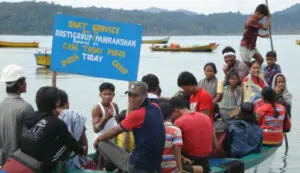
Give2Asia mobilized its network of local charities to support relief and long-term recovery in India, Indonesia, Sri Lanka, and Thailand. Individual and corporate donors, including the Starbucks Foundation, responded.
Together, they directed $10 million through Give2Asia to locally led relief and recovery.
The response taught a lesson that has shaped our disaster work ever since: effective disaster philanthropy depends on relationships built before a crisis hits. Local organizations understand their communities and can see needs as they change. They also stay long after international attention moves on.
A Bridge Built to Last
In five years, Give2Asia went from an unanswered question to a working answer:
- An idea became an independent public charity.
- One scholarship grant grew into work across multiple countries.
- Corporate partners joined family philanthropy.
- Overseas nonprofits gained a path to U.S. supporters.
- When one of the region’s most devastating disasters struck, $10 million reached the local organizations responding on the ground.
Those early years set principles that still guide us:
- local knowledge
- trusted relationships
- responsible cross-border giving
- the conviction that philanthropy works best when it connects donors with organizations rooted in the communities they serve
The foundation was set. What came next would carry Give2Asia into some of the most important moments in Asian philanthropy.
Next in our 25 Years of Impact series: 2005–2010, a period of early growth and new partnerships in which Give2Asia emerged as a leader in cross-border philanthropy.